In Amsterdam, transport comes down to one sentence: you will cycle. Everything else, passes and cards, covers the exceptions. Here is how to get set up in your first week, what it costs, and the mistakes that get expensive.
The bike, first
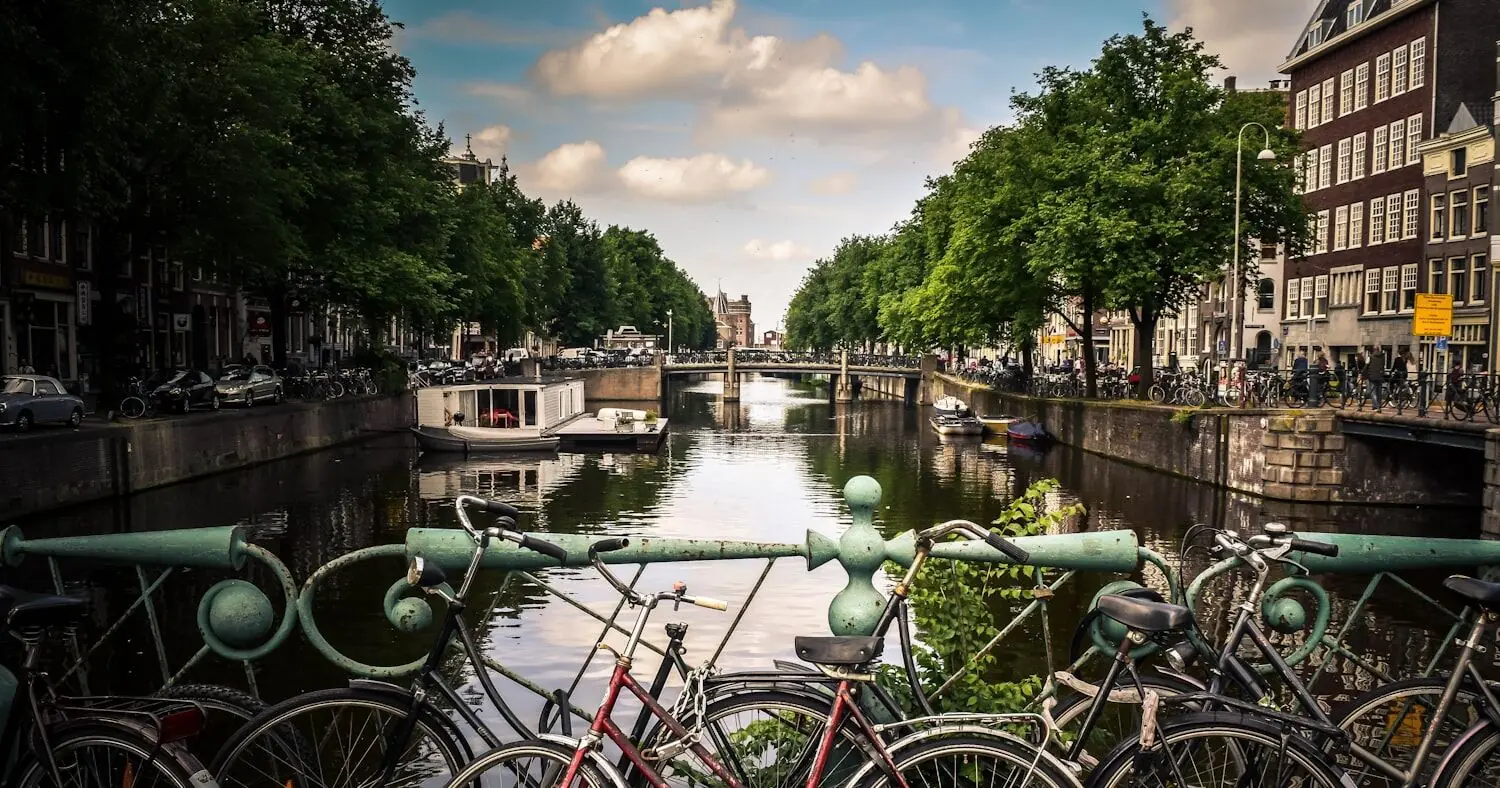
This is not a postcard cliché: it is the fastest way across the city, and by far the cheapest. A four-kilometre trip takes fifteen minutes by bike, twenty-five by tram and sometimes longer by car.
- Buy second-hand: €120 to €250 for a decent bike. Go through a shop rather than a classified ad or someone on the street: stolen bikes circulate, and buying one is an offence.
- Rent monthly: Swapfiets runs from about €20 a month, repairs included. It is the simplest option for the first few months, before you know whether you are staying.
- The lock: budget €40 to €80 and get two. A U-lock through the rear wheel and frame, and a chain to attach the bike to something fixed. That is the local standard, not excess caution.
- Insurance: worth it on a new bike, pointless on a €150 second-hand one.
Bikes get stolen in Amsterdam. It happens to everyone once. That is exactly why the city rides old, unglamorous bikes, and why you should too.
The cycling rules worth knowing
Cycle paths are proper traffic lanes, with right of way, traffic lights and police who issue fines.
- Lights are compulsory after dark, white front, red rear. The fine is around €65 and checks are frequent in winter.
- No phone in hand while cycling: around €160.
- Keep right and signal turns with your arm. The cyclists behind you are moving fast and will not brake.
- Never cross tram rails at a shallow angle: the wheel drops in, and the fall is guaranteed.
- Park in the marked areas. In the centre, a badly parked bike can be removed to a pound.
Tram, metro, bus: the OV-chipkaart and what replaced it
The city network is run by GVB. Three ways to pay, easiest first for a newcomer.
- Contactless bank card (OVpay): tap in and tap out with your card or phone. Nothing to buy, nothing to top up. This is what to do in week one.
- Anonymous OV-chipkaart: a €7.50 plastic card you load with credit. Useful if you have no contactless card.
- Personal OV-chipkaart: required for passes and discounts. It needs a Dutch bank account and an address, so it comes later.
Always tap out. Forgetting to uitchecken charges the maximum fare, about €4 in the city and up to €20 on the train.
The train, for everything else
NS connects Amsterdam to the rest of the country frequently enough to make a car pointless. Utrecht is twenty-six minutes away, Rotterdam forty, Schiphol fifteen from Amsterdam Zuid.
If you live in a neighbouring town, the pass is what makes the rent saving real:
- Dal Voordeel: about €5 a month, 40% off outside peak hours.
- Weekend Vrij or Altijd Voordeel: for frequent journeys, worth comparing against your hours.
- Commuter pass: often partly or fully covered by a Dutch employer. Ask before you sign your contract.
A Haarlem to Amsterdam return costs about €9 at full fare, under €6 with Dal Voordeel. Over a working month that stays far below the rent gap between the two towns: the trade-off is set out in our guide to living around Amsterdam.
Cars: why almost nobody keeps one
This is not ideology, it is parking.
- Resident parking permits are capped by neighbourhood. In the centre and the canal belt, the waiting list runs to years.
- Metered parking reaches €7.50 an hour in the centre.
- P+R car parks on the edge of the city are the sensible alternative: leave the car, finish by metro for a few euros.
- Car sharing (Greenwheels, MyWheels) covers the occasional need without the fixed costs.
If you are arriving with a car, know that a parking space becomes a search criterion in its own right, and it costs. We factor it in when it is a genuine need.
What it costs per month
- Second-hand bike: about €15 a month spread over two years, maintenance included.
- Swapfiets: €20 to €25 a month, no surprises.
- Occasional tram journeys: €30 to €60 a month for light use.
- Unlimited GVB pass: about €100 a month.
- Daily train from a neighbouring town: €100 to €180 a month depending on distance and pass.
The most common combination among our clients: a bike for daily life and a contactless card for rainy days. That comes to under €50 a month.
The neighbourhood changes everything
Living fifteen minutes by bike from work, or forty minutes of combined travel, is not the same life, and no travel pass fixes it. That is why we always ask where you work before suggesting a neighbourhood: our neighbourhood matcher takes it into account, and every profile in our neighbourhood guide gives the cycling time to the centre.